
The Processing
.....musings under the Harvest Moon

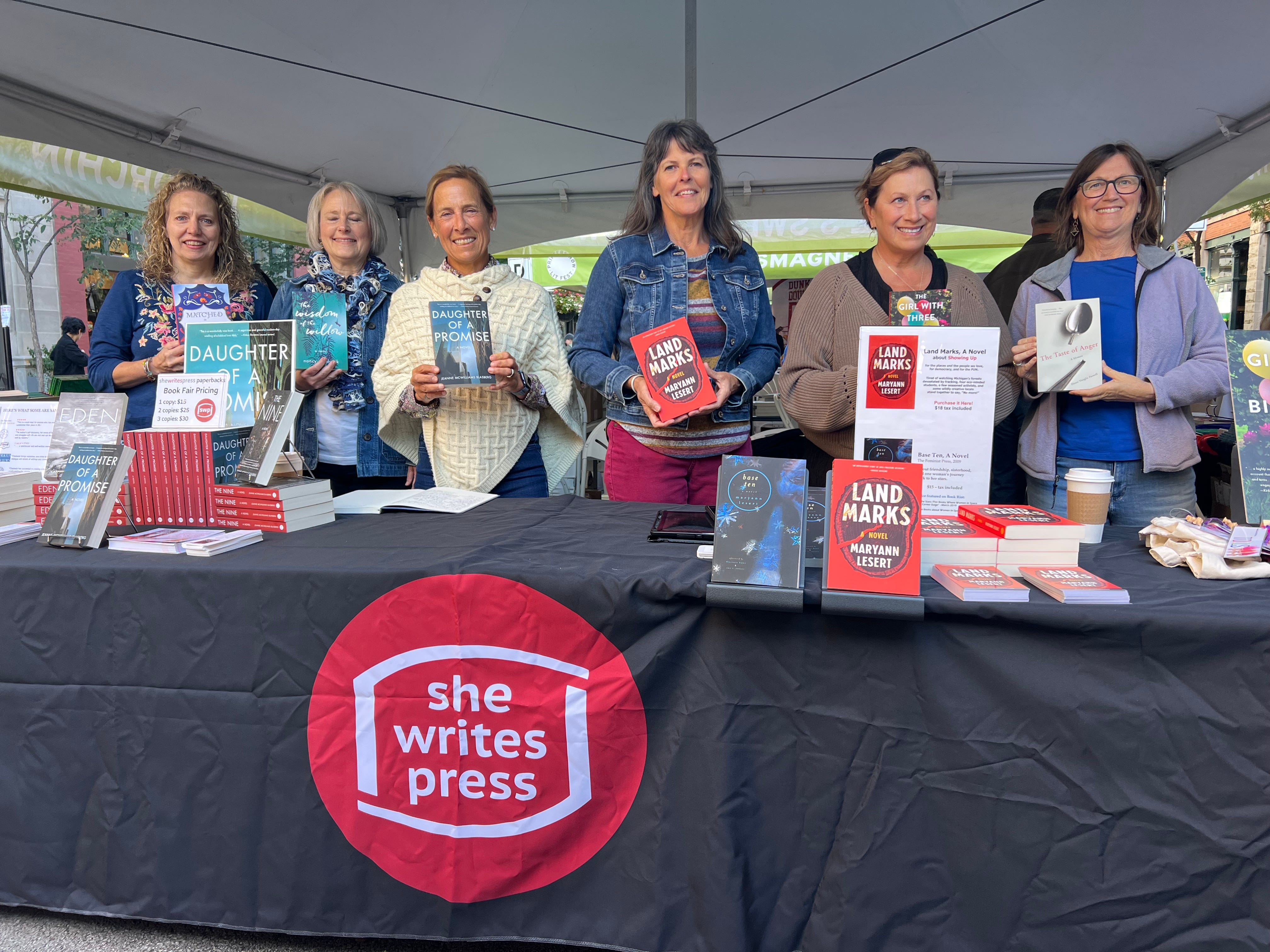
Happy Autumnal Equinox to those who celebrate :) It’s book festival season. I’ve recently returned from Chicago’s Printers Row Lit Fest and looking forward to the Brooklyn and Boston Book Festivals in the coming weeks. Please come see me!! Spending time with other authors, meeting readers and signing copies of my novels is always a great time. I rushed back to the farm from Chicago, however, because I’d left John processing hundreds of pounds of tomatoes. You see, in addition to book festival season, it’s tomato season with our harvest outpacing what Forage Kitchens can take at one time… and that means preserving them in forms that extend the bounty into the winter.
Processing… aren’t we always? Whether it’s information, experiences, or vegetables we are faced with infinite raw data - and the decision whether to synthesize into something usable, or hit the proverbial “delete” button. I am afraid when it comes to my email inbox I am guilty of the latter these days, but in real life I generally process, or should I say, attempt to make meaning. Finding the space to make someting, to create, well that is the magic.
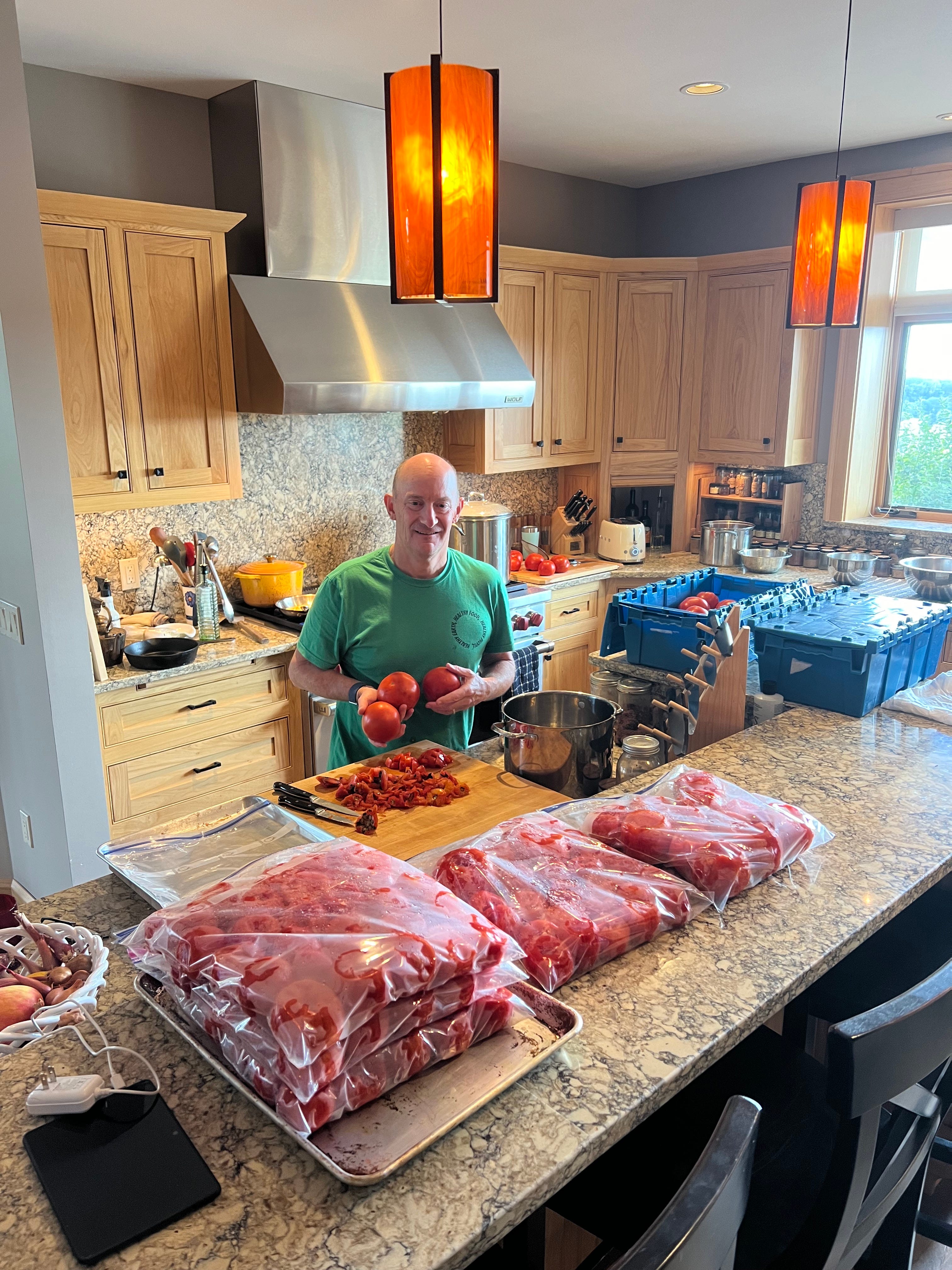
Although an abundance of anything is a blessing, with these tomatoes (and now peppers and squash) I am infused with an urgent sense of panic to process, hoping to strike the right balance between what we should preserve and what goes onto the compost pile. This is hard for me because I was raised on the notion waste is evil.
As I write, I’m going into my third consecutive weekend of freezing. and dehydrating, the slicer tomatoes, making sauces and savory jams with the Romas, and blistering the skin off Italian fryer peppers over a flame. I’m channeling a little Barbara Kingsolver - not at the writing desk, but because she is also a role model for us September tomato mavens!! I have to take deep breaths and remind myself that what can’t be preserved will be donated (already sent 40 pounds to the local fire house) and the rest will contribute to our beautiful, rich compost used to promote next year’s growth….the beauty of a regenerative system.
Processing and making meaning is also what I attempt do as a writer… These days I am having an internal debate over what is more satisfying… canning 32 oz jars of tomato sauce to be enjoyed in the mountains on snowy winter evenings or writing the next chapter of my work-in-progress…. hmmmm
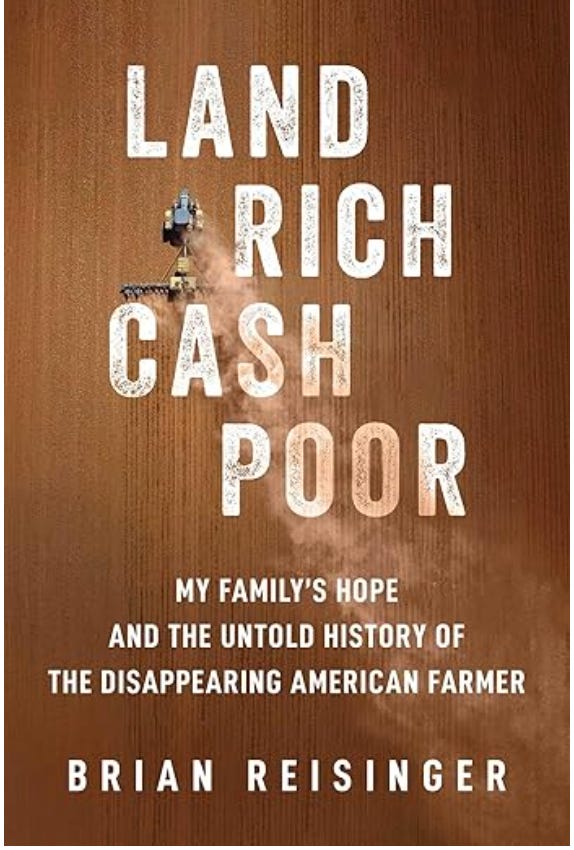
The drive to and from Chicago provided an opportunity to think about some challenges we are facing on the farm. As usual, I was kept company by an audiobook. This time it was LAND RICH CASH POOR by Paul Reisinger. Narrated by the author, this memoir describes the perils faced not only by his family farm, but by our nation’s food system in part because of the gradual disappearance of mid-sized family farms.
It concludes with observations I could relate to even at our early stage of the game. Many mid to small sized farms have problems finding markets for their products. Organic vegetable farmers routinely set up CSA’s or sell food at a farmer’s markets but those are not the most reliable and consistent source of revenue. How many times have you gone to a farmers’ market to really stock up on what your family needs for the week? If you do congratulations you’re in the minority. For so many it’s a weekend stroll or curiosity where one might find something unusual for a special meal. It’s not a dependable way for small organic farmers to count on revenue. The CSA model in which consumers buy shares in a farmer’s crops at the beginning of the season has many shortcomings as well. So, what excited John and I so much about the opportunity with Flynn Creek Farm was that being vertically integrated with a fast-casual chain of restaurants in Forage Kitchens meant a steady and stable customer and thus revenue stream. It was also a distribution model that would get our nutrient dense food into the mouths of average people.


Unfortunately, we are learning how difficult this is. Number one is price. Farmers have historically been price takers instead of price makers and the true cost of local organic vegetables is proving hard to pass on. That’s even before getting skittish about passing on the true price of food in an economy where so many are grumbling about exploding food prices. Consumers in the United States have been trained to expect cheap food as is demonstrated by campaign promises to lower food costs by both Presidential candidates.
The second obstacle is logistics. We are realizing that grocery stores and restaurants are set up to order conventional produce from the likes of the Sysco truck with Amazon-like ordering the night before. Anything taking more thought is a hoop most restaurant managers don’t want to jump through. Especially managers of fast-casual. In addition, their kitchens are small with limited cooler space, their inability to store food for more than two days becoming another reason they order “off the truck.” John and I have learned so much about the planning and timeline that goes into growing our crops, it’s no wonder that the management of a fast-casual restaurant chain isn’t up to speed yet, even a restaurant chain based on the values of fresh, healthy food.


We are making progress, but it certainly feels like we spend as much effort educating our partners and customers as we do growing outstanding product. My prior two newsletters have centered on my personal growth on the farm, but I want you to hear about all the challenges too! Don’t worry, we are pressing on with this important work. And I will continue to PROCESS what comes my way as if it is my prayer, my primary expression of faith in a crazy world, my belief in the promise of tomorrow.
I’m in awe of the hard work of farming. And your commitment.